Adding Outlets Where Power Is Needed
Receptacle Installation in Bulls Gap for properties lacking sufficient outlets, requiring GFCI protection in kitchens and bathrooms, or needing dedicated circuits for appliances
Residential electrical codes require GFCI-protected outlets in specific locations—kitchens, bathrooms, garages, and outdoor areas—where moisture contact increases shock risk. Bright Way Electrical LLC installs new receptacles with proper wiring, grounding, and code-compliant protection across Bulls Gap and East Tennessee. The work becomes necessary when you're adding appliances that exceed existing circuit capacity, when rooms lack conveniently located outlets, or when older homes have outlets that fail polarity or grounding tests during inspections.
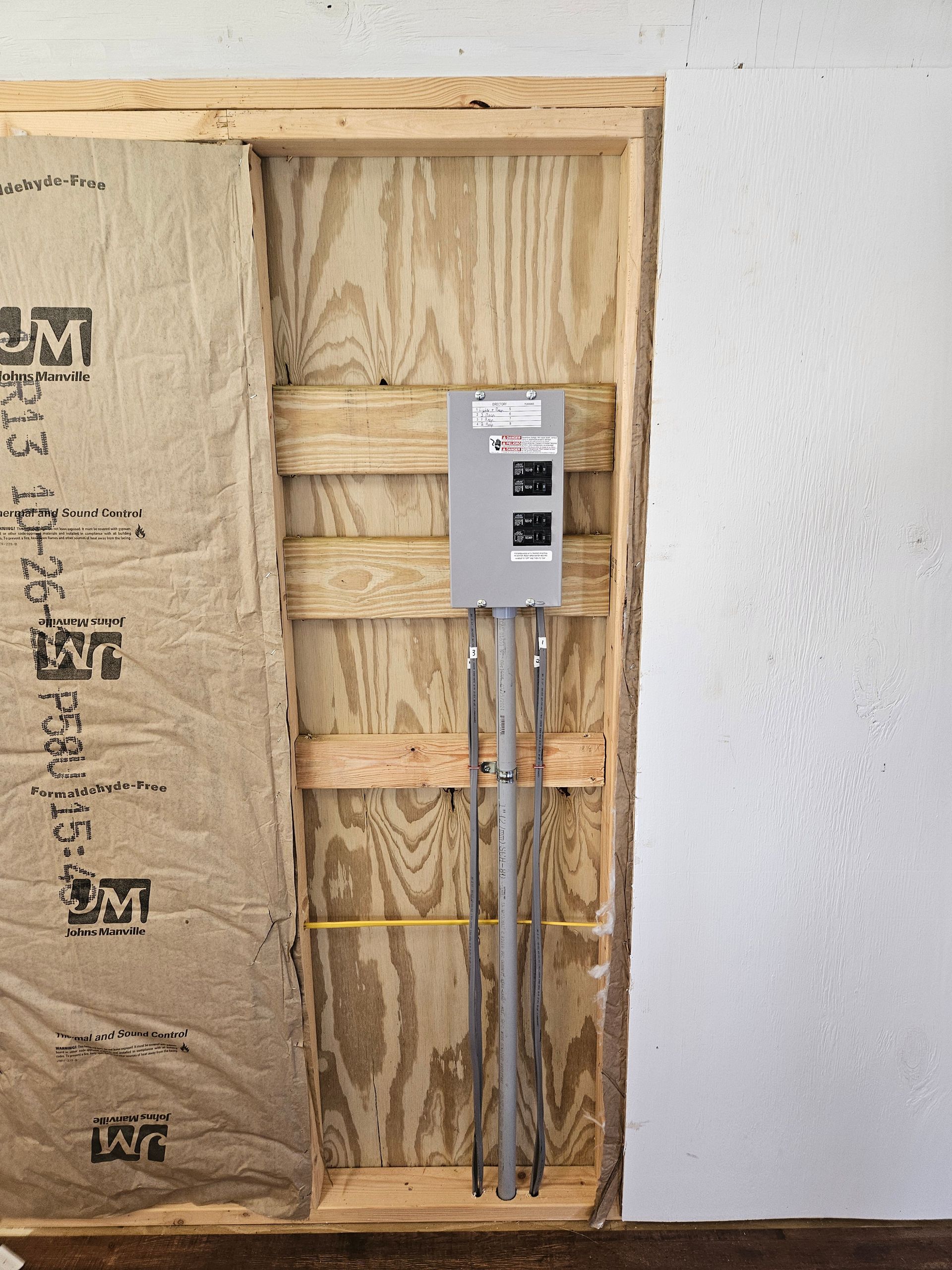
Installation begins with assessing whether existing circuits can support additional outlets or whether a new dedicated circuit must be run from the main panel. The electrician runs cable from the power source through wall cavities or conduit, installs an approved outlet box at the desired location, and connects hot, neutral, and ground conductors according to code. Each installation is tested for correct polarity and proper grounding, and GFCI outlets are installed wherever code requires them to protect against ground faults in moisture-prone areas.
Schedule an evaluation to determine circuit capacity and optimal outlet placement for your specific needs.
What Code-Compliant Installation Prevents
Improperly installed outlets create fire and shock hazards that are not immediately visible. Reversed polarity—where hot and neutral wires are swapped—means the device remains energized even when switched off, and missing or improperly connected ground wires eliminate the safety path that protects you during fault conditions. Load capacity also matters: adding outlets to an already-maxed circuit causes breakers to trip repeatedly or, worse, allows conductors to overheat without tripping if the breaker is oversized for the wire gauge.
After installation, you'll have outlets positioned where you actually use devices rather than relying on extension cords stretched across rooms, appliances that operate without overloading circuits, and GFCI protection that instantly cuts power if a ground fault occurs. Testing verifies that each outlet delivers power correctly and safely, so you can plug in equipment with confidence that the electrical supply won't damage sensitive electronics or create hazards.
The service includes determining whether your panel has available breaker slots and capacity for additional circuits, which affects whether new outlets can be added to existing wiring or require dedicated lines. Older panels with all slots filled or insufficient amperage capacity may need upgrades before new high-draw outlets can be installed safely.
Questions About Adding or Upgrading Outlets
Homeowners frequently ask about costs, code requirements, and what the installation process involves for their specific situation.
How many outlets can be added to an existing circuit?
Most residential circuits safely support 8 to 10 outlets depending on the devices plugged in, but high-draw appliances like space heaters, window air conditioners, or power tools often require dedicated circuits to prevent overloads in Bulls Gap homes.
Where does code require GFCI outlets?
GFCI protection is mandatory within six feet of sinks, in bathrooms, garages, unfinished basements, crawlspaces, and all outdoor locations where moisture exposure increases the risk of ground faults that can cause shock or electrocution.
Can outlets be added without opening walls?
In some cases, cable can be fished through existing wall cavities from attic or basement access points, but installations in finished rooms with no access often require small access holes that are patched and finished after wiring is complete.
What is the difference between 15-amp and 20-amp outlets?
20-amp outlets have a horizontal slot on the neutral blade and connect to 12-gauge wire and 20-amp breakers, supporting higher-draw devices like kitchen appliances, while standard 15-amp outlets use 14-gauge wire and are sufficient for general lighting and electronics.
How long does outlet installation typically take?
Single-outlet additions on existing circuits often complete in one to two hours, while installations requiring new circuit runs from the panel or work in difficult-to-access locations take longer depending on the complexity of the cable route.
For properties needing additional outlets or GFCI upgrades to meet current code standards, Bright Way Electrical LLC provides licensed installation with proper load assessment, grounding verification, and testing to confirm safe operation. Contact the company to discuss your outlet requirements and receive a project-specific estimate.