Lighting Systems Built for Weather Exposure
Landscape & Outdoor Lighting in Bulls Gap for properties requiring illuminated walkways, architectural accent lighting, and weatherproof installations that withstand freeze-thaw cycles
East Tennessee weather patterns—freeze-thaw cycles, heavy rainfall, and temperature swings—demand outdoor lighting fixtures and wiring methods that resist moisture infiltration and thermal expansion. Proper installation prevents the common failure modes seen with improperly grounded systems or fixtures installed without adequate weatherproofing. Bright Way Electrical LLC designs and installs landscape and outdoor lighting across Bulls Gap, using GFCI-protected circuits, weatherproof junction boxes, and grounding methods that meet code requirements for exterior electrical work.
The installation process begins with planning fixture placement for functional lighting along walkways and driveways, accent lighting for architectural features or landscaping, and security lighting for entry points and dark corners. Low-voltage systems run from transformers stepped down to 12 volts, while hardwired line-voltage systems connect directly to outdoor circuits protected by GFCI breakers. All cable runs use conduit protection where exposed to physical damage or direct burial, and connections are made in weatherproof enclosures that keep moisture away from terminals.
Request a detailed estimate based on your property layout and specific lighting objectives.
What Proper Grounding and Protection Accomplish
Outdoor electrical work requires grounding and overcurrent protection that indoor circuits do not, because moisture creates pathways for fault current that can energize metal fixtures or damage equipment. GFCI protection detects ground faults within milliseconds and shuts off power before shock or fire hazards develop. In Bulls Gap's climate, where rain and snow regularly contact outdoor fixtures, this protection is not optional—it's a code requirement for all exterior outlets and lighting circuits.
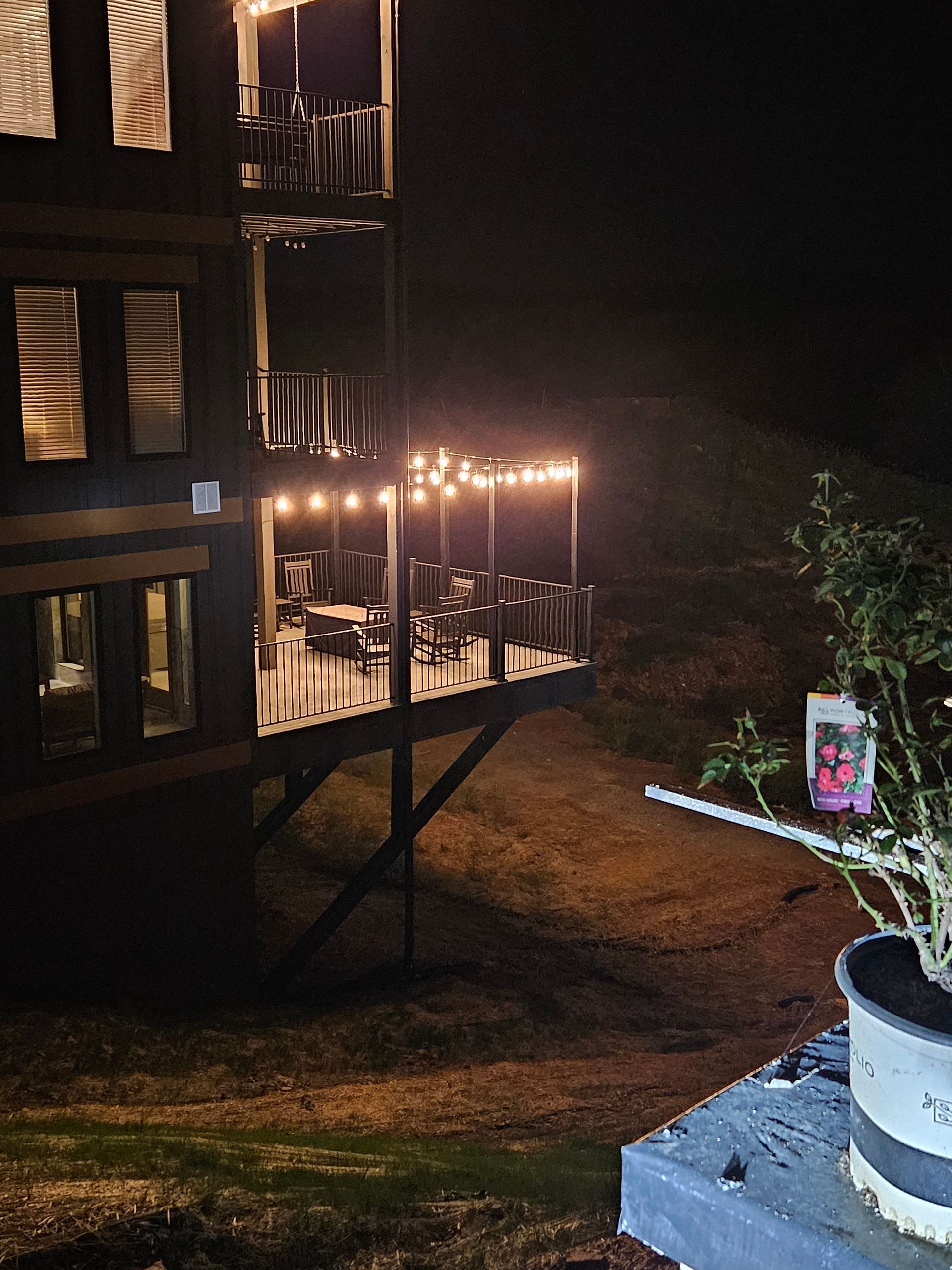
Once the system is operational, your property will have consistent illumination along paths and at entry points, with fixtures that turn on reliably in all weather conditions and do not corrode or fail prematurely from moisture exposure. You'll notice that outdoor spaces remain usable after dark, landscape features gain visual depth from uplighting or accent placement, and security improves as dark zones around the property are eliminated.
The installation includes proper conduit burial depth and routing to prevent cable damage from landscaping equipment or settling soil, which protects the wiring investment over the long term. Shallow or unprotected cable runs often fail within a few seasons when lawn equipment severs lines or frost heave shifts burial depth, requiring expensive excavation and repair work.
Answers to Frequent Lighting Installation Questions
Outdoor lighting decisions often involve choosing between system types, understanding maintenance requirements, and planning for energy use.
What is the difference between low-voltage and line-voltage outdoor lighting?
Low-voltage systems operate at 12 volts through a transformer, offering easier installation and lower shock risk, while line-voltage systems run at 120 volts directly from the electrical panel and support higher-wattage fixtures for broader area coverage.
How does freeze-thaw weather affect outdoor lighting in Bulls Gap?
Moisture that enters fixtures or junction boxes expands when frozen, cracking housings and corroding connections, which is why weatherproof-rated enclosures and proper sealing are necessary for installations across East Tennessee where winter temperatures regularly drop below freezing.
Can outdoor lighting be controlled by timers or smart switches?
Most systems integrate with timers, photocells that activate at dusk, or smart controls that allow scheduling and remote operation, giving you flexibility in how and when lights activate without manual switching.
How much does landscape lighting increase electricity costs?
Low-voltage LED systems typically add only a few dollars per month to utility bills, while line-voltage systems with higher-wattage fixtures increase costs more noticeably depending on how many hours per night the lights operate.
What maintenance does outdoor lighting require after installation?
LED fixtures generally require no maintenance beyond occasional cleaning, but connections should be inspected periodically for corrosion, and GFCI outlets should be tested monthly to verify they trip properly and provide ongoing protection.
Bright Way Electrical LLC designs outdoor lighting systems that balance functional illumination with energy efficiency and long-term durability in regional weather conditions. Schedule a property evaluation to identify optimal fixture placement and system sizing for your landscape and architectural features.