Fans Mounted Safely With Proper Support
Ceiling Fan Installation in Bulls Gap for rooms needing air circulation without unsafe mounting or electrical hazards
Improper ceiling fan installation creates safety hazards when inadequate support allows fans to wobble or detach, and when faulty electrical connections cause overheating or fire risk. Bright Way Electrical LLC installs ceiling fans with proper wiring, support, and code compliance across Bulls Gap and East Tennessee residential properties. After installation, fans operate smoothly without vibration or noise, remain securely mounted to structural framing rather than drywall alone, and connect to wall switches or remote controls through properly protected circuits.
Installation begins with assessment of the existing junction box and wiring to verify whether the box is rated for fan support and whether wiring can handle the fan's electrical load. If the existing box attaches only to drywall, electricians install a proper support frame anchored to ceiling joists before mounting the fan. Electrical connections run to wall switches or wireless remote receivers, with all wiring enclosed in code-compliant boxes and grounded to prevent shock hazards.
Request a detailed estimate based on your ceiling height, fan specifications, and whether switch wiring modifications are needed.
Why Correct Mounting Works for Long-Term Operation
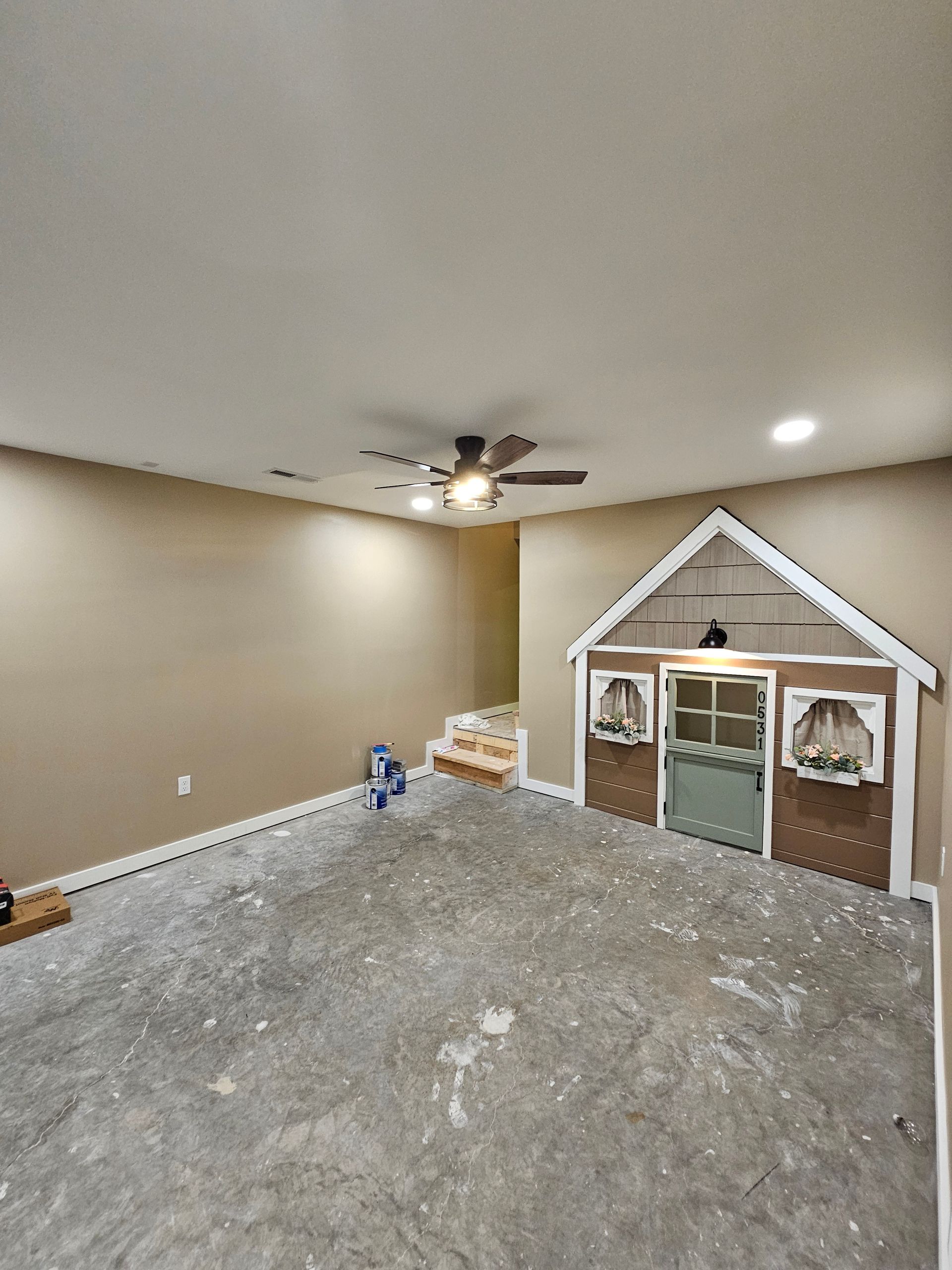
The installation process requires verifying that the ceiling junction box is rated to support at least 50 pounds of dynamic load, which standard light fixture boxes often cannot handle. If the existing box is insufficient, the electrician cuts access to the ceiling framing, installs an adjustable fan-rated brace between joists, and mounts a new junction box to that brace. Wiring connections follow manufacturer specifications for motor leads, light kit circuits if included, and capacitor integration that controls fan speeds.
After installation completes, the fan operates at all speed settings without wobbling, humming, or creating rattling sounds that indicate loose mounting hardware or unbalanced blades. The electrical connection delivers consistent power without flickering lights or motor hesitation, and the fan remains securely attached to structural framing through vibration and normal use. Remote controls or wall switches activate the fan reliably without requiring repeated button presses or experiencing intermittent connection failures.
Licensed electrician installation ensures code-compliant wiring and secure structural mounting that prevents failures common with DIY installations. The service includes testing fan balance, verifying switch operation, and confirming that all electrical connections are enclosed in proper boxes rather than exposed in ceiling cavities.
Common Questions About This Service
Homeowners throughout Bulls Gap and nearby Newport typically want to understand structural and electrical requirements before adding ceiling fans to rooms.
What happens if my ceiling junction box isn't rated for fan support?
The electrician installs a fan-rated brace system between ceiling joists and mounts a new junction box to that brace. This provides the structural support necessary to prevent the fan from pulling loose under the dynamic loads created by motor operation and blade rotation.
How does ceiling fan wiring differ from light fixture wiring?
Fans require separate wiring for motor circuits and light kits if included, plus capacitor integration that controls multiple speed settings. Improper wiring causes fans to operate at only one speed, prevents remote control function, or creates electrical hazards from exposed connections.
Why do some ceiling fans wobble even after installation?
Wobbling indicates either unbalanced blades, loose mounting hardware, or inadequate structural support. Proper installation includes blade balancing, secure fastener torque, and fan-rated mounting that eliminates vibration from the start rather than requiring post-installation correction.
When should I add a ceiling fan instead of relying on HVAC alone?
Ceiling fans improve air circulation in rooms with poor airflow, reduce perceived temperature through wind chill effect, and lower cooling costs by allowing higher thermostat settings. They work best in bedrooms, living areas, and covered porches where occupants benefit from direct airflow.
What's included in professional ceiling fan installation in East Tennessee?
The service covers junction box evaluation and replacement if needed, fan assembly and mounting to structural framing, all electrical wiring and switch integration, operational testing at all speed settings, and verification that installation meets Tennessee electrical code requirements.
Bright Way Electrical LLC handles all mounting and electrical integration for ceiling fans in Bulls Gap area homes, ensuring installations meet structural and code requirements without safety compromises. Arrange an evaluation to determine whether your ceiling can support a fan with existing framing or requires additional structural preparation.